
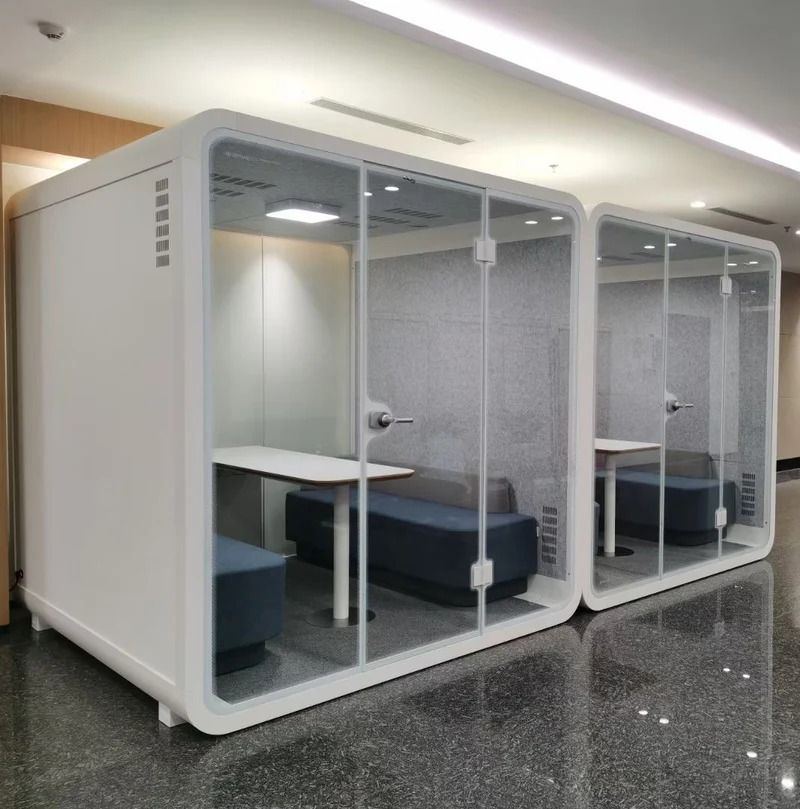
Expert Guide to Choosing a Soundproof Phone Booth for Work

Why privacy matters in a shared office
Open-plan workplaces are efficient, but they often struggle with speech clarity and background noise. When conversations travel across desks, they can disrupt concentration and make it harder for employees to complete focused tasks. A dedicated quiet soundproof phone booth office space gives people control over their environment so meetings, calls, and presentations stay understandable. That control is especially important when teams share thin walls, busy corridors, or shared breakout areas.
Acoustic privacy is not only about reducing volume; it’s also about containing intelligible speech. If the noise level drops but voices still carry, employees may feel exposed or distracted. A well-designed enclosure uses layered materials and sealed construction to limit sound transmission. This creates a more professional experience for both the caller and the surrounding team.
What to look for in a sound-blocking enclosure
Start by evaluating how the enclosure is built and how it seals to prevent leaks. Door quality, joint alignment, and wall thickness all impact performance, so prioritize products engineered for acoustic isolation rather than basic “noise reduction.” Look for a system that includes a phone booth for office space reliable door seal and interior acoustic treatment, which helps prevent sound from escaping and echoing inside. A quieter booth should feel stable and consistent, not muffled in a way that still allows voices to spill out.
Next, consider the interior layout and comfort for the person using it. Ventilation matters too, because a sealed booth can become stuffy if airflow is not handled thoughtfully. Lighting and cable routing also contribute to usability, especially for staff who need to connect to peripherals during customer calls. If the booth supports easy entry and setup, adoption tends to be higher and the space gets used more often.
Installation, placement, and workflow recommendations
Placement can dramatically affect real-world results, even with strong acoustic design. Choose a location away from high-traffic areas where footfalls and conversations are constant, because mechanical and impact noise can reduce perceived quiet. If the booth must sit near common walkways, use a plan that includes buffer space and minimizes hard surfaces nearby. In many offices, the best results come when the booth is positioned so the door faces a quieter zone rather than a busy desk row.
Plan for workflow by mapping which tasks require the booth and when they happen. Some teams use it primarily for customer calls, while others need it for interviews, video meetings, or confidential documentation discussions. Consider the number of seats and expected call length so staffing schedules do not create bottlenecks. It’s also smart to coordinate with IT or facilities to decide where power outlets and network connections will be routed. With the right planning, a quiet room becomes a strategic tool rather than an underused feature.
Conclusion
A sound-blocking enclosure can elevate professionalism, reduce distractions, and protect confidential conversations in busy workplaces. The best results come from choosing a booth designed for acoustic isolation, with thoughtful sealing, comfortable interior space, and practical installation planning. When you focus on these criteria, the booth becomes a reliable part of daily operations rather than a compromise solution. For expert guidance and premium acoustic options, many teams look to soundboxstore. Their approach to workplace privacy emphasizes quiet, focused environments for calls, meetings, and concentrated work, using products built to support modern business needs. If you’re comparing options, use performance details and usability features together—both determine whether the enclosure truly delivers a calmer workday.
Leave Your Comment